E-commerce websites face fierce competition for visibility on search engines. Even with well-optimized product pages, high-quality content, and a smooth user experience, ranking higher often depends on factors beyond your website. This is where off-page SEO comes in. Off-page SEO focuses on building authority, trust, and reach through external signals, such as backlinks, social media activity, and mentions across the web.
For e-commerce stores, it’s not just about ranking—it’s about driving traffic, building credibility, and ultimately increasing sales. Without a strong off-page SEO strategy, even the best products may remain hidden from potential customers.
Contact For eCommerce SEO/ Audit or FREE Help.

Hi, I’m Md Tangeer Mehedi — an eCommerce SEO expert.
I help online stores get more sales through Google Search and AI-powered results.
If your products aren’t ranking, you’re losing buyers.
Contact me and tell me about your store—I’ll show you how to fix it.
1. Understanding Off-Page SEO for E-commerce
Off-page SEO refers to all the actions taken outside your website to improve its search engine rankings. Unlike on-page SEO, which focuses on optimizing content, keywords, and technical elements on your site, off-page SEO is about building authority, trust, and relevance through external signals.
For e-commerce websites, off-page SEO plays a crucial role in helping your store stand out in a crowded market. Search engines use off-page factors to evaluate how trustworthy and authoritative your website is. If other reputable websites link to your product pages or your brand is frequently mentioned on social media, search engines interpret this as a signal of quality.
Key benefits of off-page SEO for e-commerce include:
- Higher Search Rankings: Quality backlinks and mentions improve your site’s credibility, boosting rankings in search results.
- Increased Referral Traffic: Links from external sites can drive targeted visitors directly to your store.
- Brand Authority and Trust: Consistent mentions and backlinks establish your brand as an authority in your niche.
Understanding the difference between on-page and off-page SEO helps store owners allocate resources effectively. Together, they form a complete SEO strategy that drives traffic, sales, and long-term growth.
2. Backlink Building Strategies
Backlinks remain one of the most influential off-page SEO factors for e-commerce websites. A backlink is a link from another website pointing to your store, signaling to search engines that your site is trustworthy and authoritative. However, not all backlinks are equal—quality matters far more than quantity.
Key Strategies for E-commerce Backlinks:
1. Focus on Quality over Quantity
High-authority sites linking to your store carry more weight than numerous low-quality links.
2. Guest Posting and Collaborations
Contribute high-quality articles or product reviews to relevant blogs or publications.
3. Influencer Outreach
Partner with influencers in your niche to generate backlinks through product mentions and reviews.
4. Broken Link Building
Identify broken links on relevant websites and suggest your product page as a replacement.
5. Resource and Roundup Links
Submit your content, guides, or products to industry resource pages or weekly roundups for credible backlinks.
A consistent and strategic approach to backlink building strengthens authority, improves rankings, and increases organic traffic over time.
3. Social Media Engagement
Social media is more than just a marketing tool—it’s an essential part of off-page SEO for e-commerce websites. While social signals like likes and shares do not directly determine search rankings, they play an indirect role by increasing visibility, driving traffic, and generating backlinks.
Best Practices for E-commerce Social Media SEO:
1. Share Products Strategically
Promote product pages, blog content, and offers on active platforms to increase engagement and backlinks.
2. Leverage Visual Platforms
Instagram, Pinterest, and TikTok are ideal for showcasing products and attracting backlinks through shared content.
3. Encourage User Engagement
Customer reviews, photos, and testimonials act as social proof and expand online presence.
4. Collaborate with Influencers and Communities
Influencer engagement can drive traffic and create opportunities for backlinks.
5. Monitor Mentions and Shares
Engage with mentions to build relationships and earn additional backlinks.
4. Content Marketing & Promotion
Content marketing is a cornerstone of off-page SEO for e-commerce websites. Creating high-quality, shareable content attracts customers and encourages other websites to link back to your store.
Effective Content Marketing Strategies:
1. Create Shareable Content
Develop guides, infographics, videos, and blog posts relevant to your niche.
2. Syndication and Outreach
Share your content with industry blogs and forums to increase backlinks and reach.
3. Encourage User-Generated Content
Customer reviews, unboxing videos, or tutorials generate trust and backlinks.
4. Promote Seasonal or Trending Content
Timely content is more likely to get shared and linked to by other websites.
5. Collaborate with Influencers and Bloggers
Influencer content naturally includes backlinks, driving traffic and authority.
5. Local SEO & Business Listings
For e-commerce websites with physical stores or local service areas, local SEO is essential. It boosts visibility, drives targeted traffic, and enhances trust.
Key Local SEO Strategies:
1. Optimize Google Business Profile
Complete business information, product listings, and regular updates increase local authority.
2. Submit to Local Directories
Reputable directories provide backlinks and make it easier for customers to find your store.
3. Encourage Local Reviews
Positive reviews improve credibility; responding to reviews builds trust.
4. Local Content Promotion
Content relevant to your location can attract local backlinks and mentions.
5. Leverage Local Influencers and Partnerships
Collaborations strengthen local SEO presence through mentions and links.
6. Online Reputation Management
A strong online reputation is crucial for e-commerce websites. Both search engines and customers trust brands with positive reviews and a solid online presence.
Key Strategies for Reputation Management:
1. Monitor Reviews and Mentions
Track reviews on Google, social media, and niche platforms using tools like Google Alerts.
2. Encourage Positive Feedback
Ask satisfied customers to leave reviews and testimonials.
3. Respond Professionally to Negative Reviews
Address negative feedback calmly and professionally to build trust.
4. Promote Brand Mentions
Share mentions, features, or collaborations to strengthen authority.
5. Build Trust Signals
Accreditations, certifications, and media coverage reinforce credibility.
7. Monitoring and Measuring Off-Page SEO Success
Tracking off-page SEO performance ensures your strategies deliver results. Without monitoring, it’s impossible to know what’s working.
Key Metrics and Tools:
1. Backlink Analysis
Tools like Ahrefs, SEMrush, or Moz track new/lost backlinks and their quality.
2. Referral Traffic
Google Analytics shows which external sites are sending visitors.
3. Social Signals
Monitor shares, likes, and comments for visibility insights.
4. Brand Mentions
Use Mention, Brand24, or Google Alerts to track brand discussions online.
5. Search Engine Rankings
Track changes in keyword rankings for both branded and non-branded terms.
Monitoring these metrics helps refine strategies, focus on high-impact tactics, and ensure sustainable growth.
Conclusion
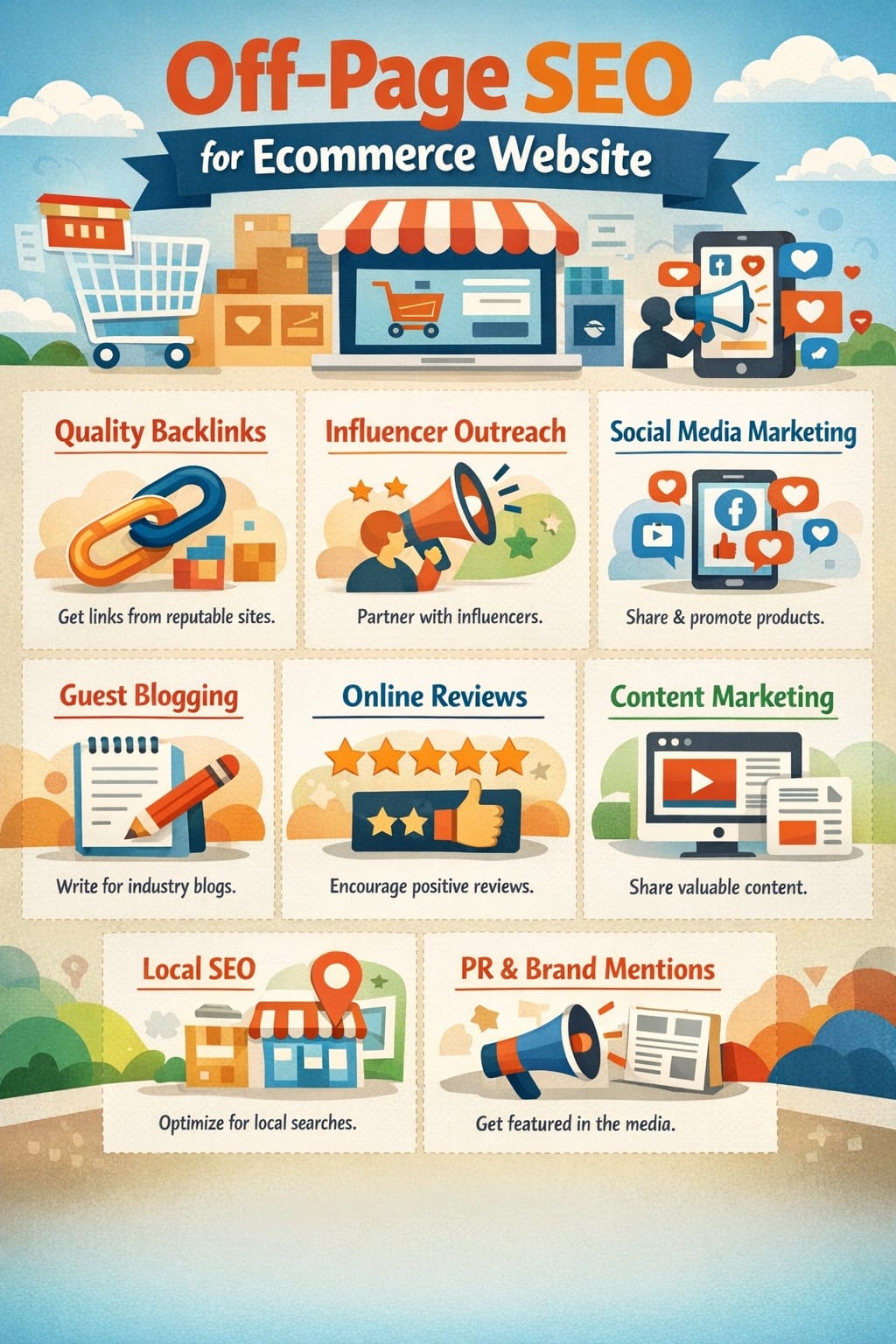
Off-page SEO is a vital component of a successful e-commerce strategy. While on-page SEO ensures your website is optimized, off-page SEO builds authority, trust, and visibility across the web. From backlinks and social media engagement to content promotion, local SEO, and reputation management, each tactic contributes to driving traffic, improving rankings, and boosting sales.
For e-commerce websites, consistent off-page SEO efforts are essential. By monitoring results, refining strategies, and focusing on quality signals, store owners can create a strong online presence that attracts customers, earns trust, and sustains long-term growth. Off-page SEO is an ongoing investment in your brand’s digital authority.