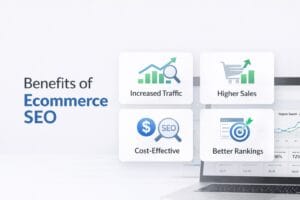
Running an online store means competing with thousands of others offering similar products. While paid ads can bring temporary visibility, they stop delivering results once the budget runs out. This is where ecommerce SEO becomes essential.
By optimizing your store for search engines, you increase your chances of appearing in front of people actively searching for your products. A well-executed SEO strategy improves your store’s visibility, attracts organic traffic, builds trust, and leads to higher conversions — all without relying heavily on paid marketing.
What Is Ecommerce SEO?
Ecommerce SEO is the process of optimizing your online store to rank higher in search engine results for relevant keywords. Unlike traditional SEO, which may focus on blog content or service pages, ecommerce SEO centers around optimizing product pages, category pages, internal linking, and technical site structure.
It involves using keyword research to target product-related search terms, optimizing product descriptions and images, ensuring fast page speed, creating a logical navigation structure, and using structured data to help search engines understand your content. The ultimate goal is to drive qualified traffic to your store — people who are already looking for the types of products you sell.
Increased Organic Traffic
One of the most valuable benefits of ecommerce SEO is its ability to generate consistent, high-quality organic traffic. Unlike paid ads that stop showing once the budget runs out, SEO brings in traffic over the long term without ongoing costs per click.
By targeting specific keywords that your ideal customers are searching for — like product names, categories, or buying-intent phrases — SEO ensures your store appears in front of users when they’re most likely to make a purchase. For example, optimizing for terms like “best running shoes for women” or “buy DSLR camera online” can drive shoppers who are already close to making a decision.
Optimized product pages, category hierarchies, and site architecture help search engines understand and index your content better, improving your chances of ranking higher and bringing in more visitors over time.
Higher Conversion Rates
Ecommerce SEO doesn’t just bring more traffic — it brings the right traffic. When users find your store through targeted search terms, they’re already interested in what you’re offering. This intent-driven traffic is far more likely to convert into actual sales.
Optimizing elements like meta titles, product descriptions, image alt text, and structured data helps search engines match your pages with user queries. At the same time, clear and informative content helps potential buyers make confident decisions.
SEO also contributes to a smoother buying experience. Fast page loads, mobile-friendly design, and intuitive navigation — all part of SEO best practices — reduce friction in the customer journey. The result is better engagement, lower bounce rates, and higher conversion rates from organic traffic.
Better User Experience (UX)
Search engines like Google prioritize websites that offer a great user experience — and so do shoppers. Ecommerce SEO naturally leads to a better-performing site by focusing on key technical and on-page factors that make browsing smoother and faster.
Mobile optimization is crucial, as more users shop from their phones. SEO ensures your store adapts to different screen sizes and loads quickly, reducing bounce rates. Site structure and internal linking are also key: a clean, logical navigation system helps both users and search engines find important pages easily.
Additionally, technical SEO practices such as fixing broken links, creating clean URLs, and improving site speed directly impact usability. The better the experience, the more likely customers are to stay, explore, and make a purchase — and Google rewards that behavior with better rankings.
Improved Brand Visibility & Trust
Ranking high in search results signals authority and builds trust with potential customers. Most users trust Google’s top results, and being among them positions your brand as a credible option — even if the user hasn’t heard of you before.
Ecommerce SEO helps you earn those top positions by optimizing not just content but also structured data like product reviews, ratings, and availability. Rich snippets, such as star ratings and price ranges, enhance how your listings appear in search results, increasing click-through rates and consumer confidence.
Over time, consistent SEO efforts also build topical authority. Publishing optimized guides, FAQs, and category descriptions helps search engines see your brand as a trustworthy source of product-related information. This long-term visibility leads to more repeat visitors, brand recognition, and ultimately customer loyalty.
Cost-Effective Marketing Strategy
Unlike paid advertising, which requires continuous budget allocation, ecommerce SEO is a long-term investment with lasting returns. Once your pages begin to rank well, they can generate traffic and sales for months or even years without additional spend.
While SEO may take time to show results, it significantly reduces your cost per acquisition (CPA) over time. Instead of paying for every click or impression, you attract potential customers organically — often at a much lower cost than PPC or social media ads.
Additionally, SEO supports other marketing efforts. Optimized content helps with email marketing, remarketing, and social sharing. It becomes a stable foundation for growth, especially useful for small or mid-sized ecommerce businesses that need sustainable ways to compete with larger brands.
Platform-Specific SEO Benefits
Different ecommerce platforms offer unique SEO features that can enhance your store’s visibility. Understanding these built-in tools helps you make the most of your chosen platform.
Shopify includes automatic sitemap generation, customizable title tags, and mobile-friendly themes. Apps are available to manage redirects, image optimization, and structured data, making it beginner-friendly for SEO.
WooCommerce, built on WordPress, offers extensive control over SEO through plugins like Yoast SEO. You can fine-tune every page, product, and category for search visibility, and access deep customization if you’re comfortable with the technical side.
BigCommerce supports clean URLs, automatic schema markup, and fast loading speeds out of the box. It also integrates easily with Google tools like Search Console and Analytics for tracking SEO performance.
Each platform has strengths and limitations, but all benefit from a solid SEO strategy tailored to your products, audience, and structure.
Conclusion
Ecommerce SEO is not just a technical add-on — it’s a core strategy for long-term online success. By improving visibility in search results, SEO helps attract high-intent customers, increase conversions, and build brand trust without relying solely on paid advertising.
From optimizing product pages and improving user experience to leveraging the strengths of your ecommerce platform, every part of SEO works together to grow your store sustainably. Investing in ecommerce SEO gives your business a competitive edge and ensures you’re visible where your customers are already looking — on search engines.