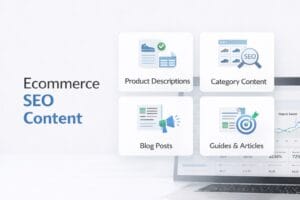
Search engines drive a significant portion of traffic to ecommerce websites, but without high-quality, optimized content, much of that potential remains untapped. Many ecommerce businesses focus heavily on paid ads or social media and overlook how crucial content is for long-term SEO success.
Whether it’s a product page that fails to rank because of duplicate descriptions or a category page that lacks keyword-rich content, weak SEO content often results in poor visibility and missed sales. Creating content that’s not just keyword-optimized but also helpful, structured, and conversion-focused can make a measurable difference. This post walks through everything from product and category optimization to technical content issues and blog strategy—designed to help ecommerce brands create content that performs.
Why Ecommerce SEO Content Is Crucial for Growth
Organic Traffic as a Long-Term Sales Driver
Paid ads can quickly drain your budget, while SEO content compounds over time. A well-optimized product or category page can rank for months or even years, attracting relevant visitors with high intent. Ecommerce SEO allows you to earn traffic instead of constantly paying for it.
The Role of SEO Content in the Customer Journey
Buyers go through stages—researching, comparing, and finally purchasing. Effective SEO content targets each phase:
- Blog posts educate during early research
- Category pages help with product comparison
- Product pages convert with detailed descriptions and trust signals
When your content aligns with this journey, you improve both search rankings and conversions.
Optimizing Product Page Content
Unique Product Descriptions
Avoid copying manufacturer descriptions. Write original, keyword-informed content that highlights benefits, features, and use cases. Include product specifications naturally while focusing on what sets the item apart.
Using Keywords Naturally
Incorporate primary and secondary keywords in:
- Product titles
- Subheadings
- Bullet points
- Descriptive paragraphs
Don’t over-optimize—write for users first, and make sure the content reads naturally.
Schema Markup and Structured Data
Add structured data (like Product, Review, and Offer schema) to help Google display rich results, including price, availability, and ratings. This increases visibility and click-through rates directly from search.
Optimizing Images and Alt Text
Use high-quality images with descriptive file names and keyword-optimized alt text. This improves image SEO and accessibility, and can also boost visibility in Google Image Search.
Avoiding Duplicate Content Across Similar Products
If you sell variations (sizes, colors), use canonical tags and product options smartly to avoid duplicate content issues. Consider consolidating similar products into one optimized page where possible.
Writing Effective Category Page Content
Role of Category Pages in SEO
Category pages help group related products and target broader search terms, such as “men’s running shoes” or “wireless headphones.” These keywords typically bring in users who are still browsing, giving you a chance to guide their journey.
Where and How to Add SEO Content Without Ruining UX
Instead of stuffing content above the fold, place a short, well-optimized intro at the top (2–3 lines), and add more detailed SEO content (150–300 words) below the product grid. This keeps the user experience clean while still offering value to search engines.
Internal Linking Strategies
Category pages should link to:
- Popular and new products
- Relevant blog content
- Subcategories or related categories
Internal links help distribute authority across your site and improve crawlability.
Targeting Mid- and Long-Tail Keywords
Use tools like Google Search Console or Ahrefs to find long-tail keywords that users search for within a category. Example: instead of just “office chairs,” also target “ergonomic office chairs for back pain.”
Technical SEO Considerations for Content
Crawlable Content and Site Structure
Ensure your product and category pages are accessible to search engine crawlers. Use a clean URL structure (e.g., /category/product-name) and avoid deep nesting. A logical hierarchy helps both users and bots find content easily.
Handling Faceted Navigation
Filters like color, size, or price can create thousands of duplicate or thin pages. Use robots.txt to block unnecessary filter URLs, or set canonical tags to point to the main category page. Implementing proper parameter handling in Google Search Console is also helpful.
Canonical Tags and Pagination
For paginated category pages (e.g., Page 2, 3, etc.), use rel="next" and rel="prev" tags (or canonical to the first page, depending on your SEO strategy). This prevents duplicate content and consolidates ranking signals.
Mobile-First Content Design
Google indexes mobile-first, so your content must be equally visible and usable on mobile devices. Avoid hiding large blocks of content in tabs or accordions unless necessary. If used, make sure hidden content is still crawlable.
Blog Content Strategy for Ecommerce
Supporting Product Discovery Through Informational Posts
Write content that answers questions your customers have before buying. For example:
- “How to choose the best hiking boots for winter”
- “Top 10 skincare ingredients for oily skin”
These posts bring in users early in their journey and can funnel them to relevant product or category pages.
Topic Clustering and Internal Linking to Product Pages
Use topic clusters — groups of related blog posts linked to a central pillar page — to strengthen SEO signals around a theme. Within posts, link naturally to:
- Product pages
- Category pages
- Related blog content
This helps search engines understand content relationships and boosts crawl depth.
Seasonal Content Planning
Plan posts around holidays, shopping events, or seasonal trends. For example, publish gift guides before Q4 or “back-to-school” content in late summer. Update and republish each year to retain rankings.
Targeting Bottom-of-Funnel Keywords with Blog Content
Don’t just target awareness-stage keywords. Write articles that attract ready-to-buy customers, such as:
- “Best budget laptops under $500”
- “Where to buy vegan leather jackets online”
These can convert well with properly placed CTAs and product links.
Best Practices for Site-Wide SEO Content
Using Consistent Tone and Branding
Maintain a unified tone across all pages — whether it’s casual, professional, or technical — to build trust and reinforce your brand identity. This includes product descriptions, category blurbs, and blog posts.
Optimizing Meta Titles and Descriptions
Every page should have a unique, keyword-optimized meta title and meta description. Use:
- Keywords near the start
- Compelling value propositions
- A clear call to action
Though not a direct ranking factor, well-written meta descriptions improve click-through rates from search results.
Updating Stale Content
Review your top-performing pages regularly and update them with fresh information, keywords, and visuals. This keeps your content competitive and signals to Google that the page is still relevant.
Measuring Content Performance
Track performance using tools like Google Search Console, GA4, or SEO platforms like Ahrefs or Semrush. Monitor:
- CTR and impressions
- Bounce rate and session duration
- Conversion rate from organic traffic
These metrics help you identify what’s working and where to improve.
Conclusion
High-performing ecommerce SEO content goes beyond keywords — it connects search intent with user needs across every stage of the buying journey. From optimized product and category pages to a strategic blog and technically sound structure, each element plays a role in driving organic visibility and conversions.
By creating helpful, search-friendly content that’s also user-focused, ecommerce brands can reduce reliance on ads, improve rankings, and build lasting customer relationships. The key is consistency, quality, and ongoing optimization — because in SEO, content that performs is content that evolves.